
Madagascar Reptile Importer Since 2009

Gold Dust Day Gecko Care Sheet

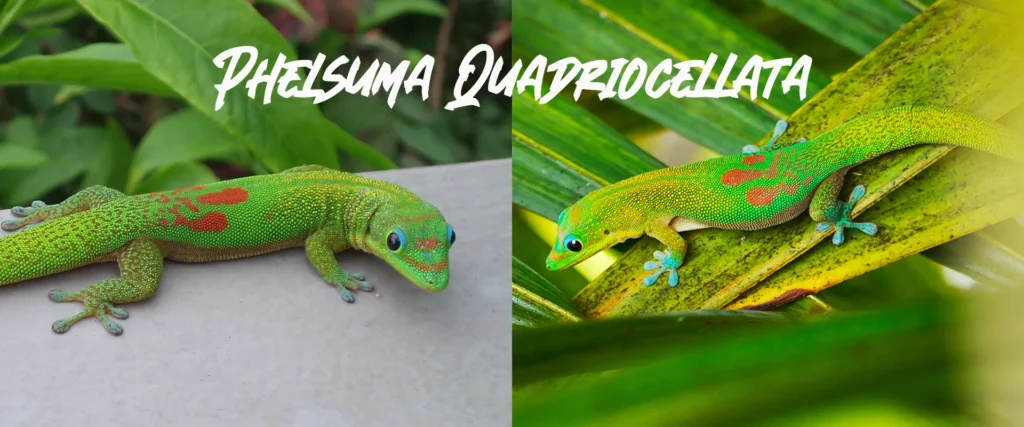
Gold dust day geckos are small, daytime-active arboreal geckos native primarily to Madagascar and nearby islands. Adults generally reach about 3.9-5.1 in (10-13 cm). Their vivid green to yellow-green body is typically marked with yellow speckling around the neck, blue around the eyes and rounded reddish markings toward the rear of the body. They have a tapered snout, lidless eyes, adhesive toe pads, a slightly flattened tail and delicate skin. Captive-bred animals are generally considered relatively hardy when their environmental needs are met, and may live up to about 15 years.


Uroplatus – Quick Summary

Origin

Madagascar

Care Level

Beginner, Intermediate, Advanced

Adult Enclosure

12 x 12 x 18 in minimum for one, Vertical arboreal setup. Tall glass preferred; PVC possible, Increase space for additional geckos. Secure, well ventilated. Larger is beneficial

Housing

Can be housed in pairs, trios. Only One male per enclosure.

Day Temperature

Basking: 28-30 C (82-86 F), Day: 24-28 C (75-82 F), Night: 20-23 C (68-74 F)

Night Temperature

Nighttime drop recommended

Humidity

Day RH 40-75%; night spike 90-100%

Lighting

13 h summer / 11 h winter, UVB target UVI 3-4

Uroplatus cage

Enclosure and housing

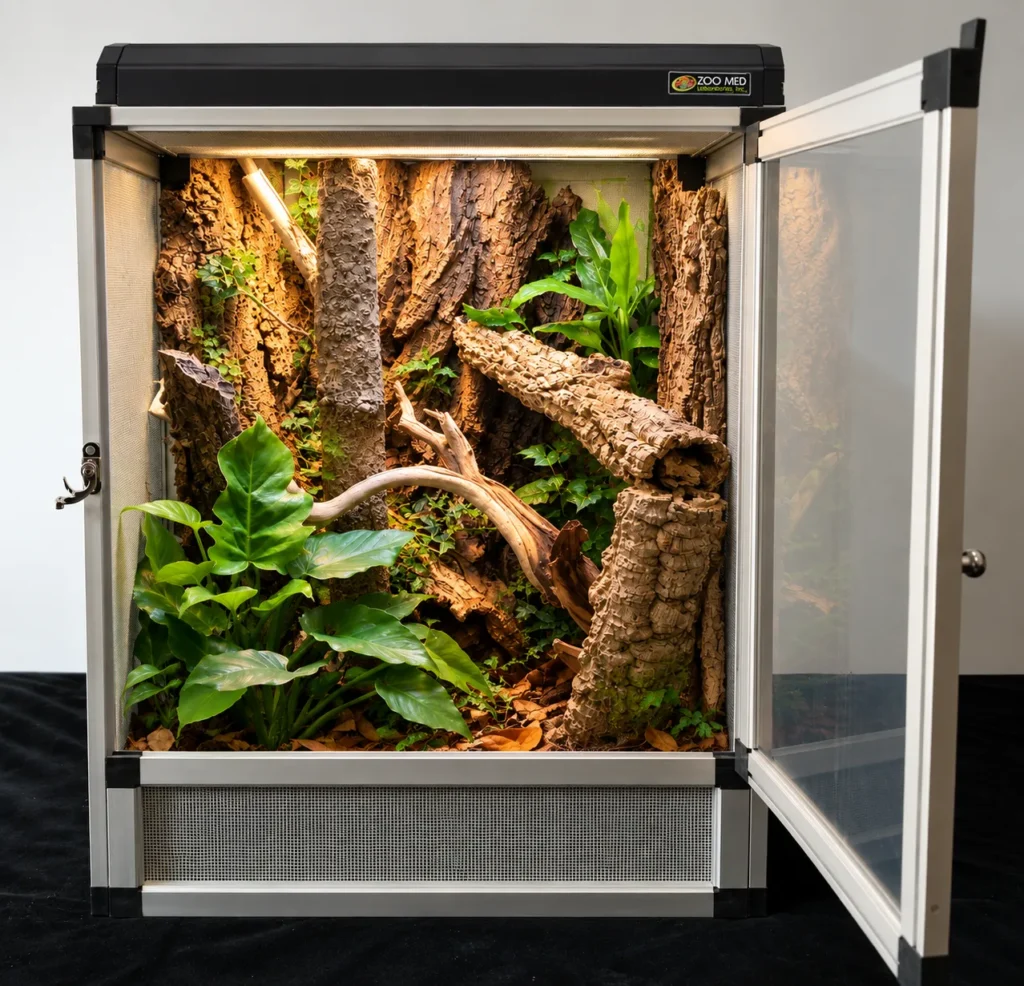
Provide a secure, vertically oriented enclosure with ample room for climbing, hunting and normal activity. The supplied reference recommends at least 12 x 12 x 18 inches (30 x 30 x 45 cm) for a single adult. Larger enclosures are beneficial when they remain well furnished and easy for the gecko to navigate. Include branches, vines, cork, elevated ledges and live tropical plants at several heights.

Housing more than one gecko

The source notes that day geckos have historically been maintained in breeding pairs or groups consisting of one male and multiple females. When breeding is not intended, it recommends a single animal or an all-female group. Any enclosure housing multiple animals must be enlarged accordingly so each gecko has room to retreat. Closely monitor for aggression, competition and chronic stress.

Substrate

A moisture-retaining tropical substrate helps stabilize humidity and provides a softer landing surface. A practical mixture is approximately 60% organic topsoil and 40% coconut fibre, topped with a generous layer of leaf litter. Other moisture-retaining tropical substrates may also be suitable. Remove feces, urates and contaminated substrate promptly, and replace or refresh the substrate according to enclosure conditions.

Branches, foliage and cover

Create a densely furnished three-dimensional habitat using branches, large vines and live or artificial foliage. Live plants can be especially useful for supporting humidity. Include vertical, horizontal and diagonal climbing surfaces of different widths, together with multiple concealed daytime resting locations. The goal is to encourage natural climbing and exploration while allowing the gecko to remain hidden when it chooses.
 

Temperature and basking

The supplied care sheet recommends a basking area of about 28-30 C (82-86 F), general daytime temperatures of about 24-28 C (75-82 F), and nighttime temperatures of about 20-23 C (68-74 F). Create a vertical thermal gradient, with warmer areas near the top and cooler retreats below. A low-wattage white daytime heat lamp may be sufficient depending on room temperature.

Burn prevention: Day geckos may climb upside down on top mesh. Keep hot lamps and overheated screen surfaces safely out of reach. Monitor the actual basking surface with a digital probe thermometer and adjust heat output as needed.


Humidity & drinking

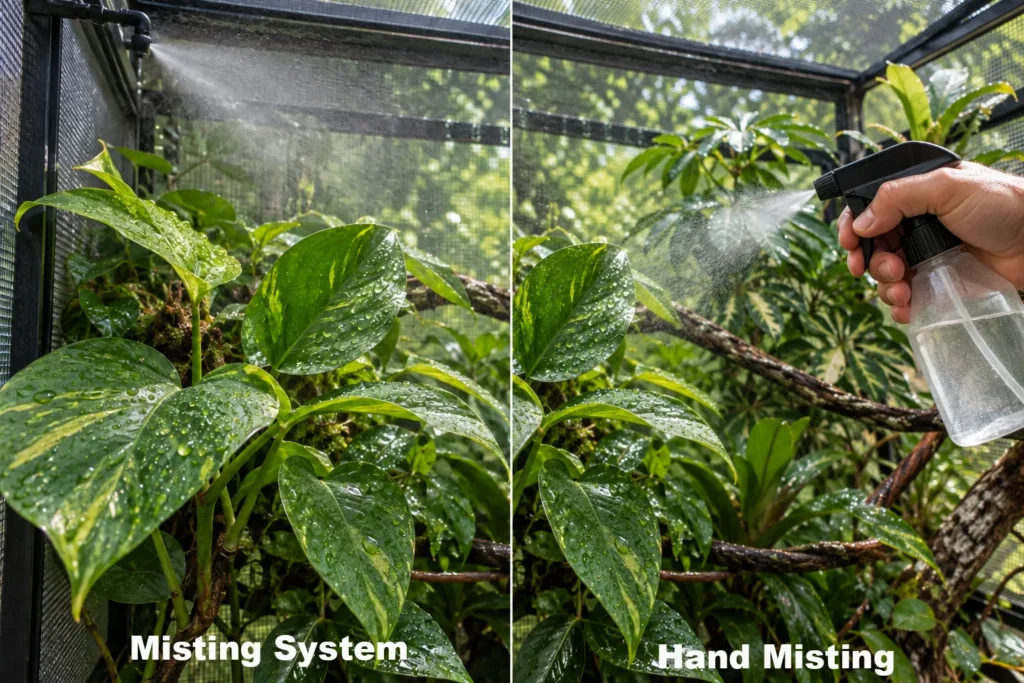
Maintain moderate-to-high humidity with a natural daily cycle. The source recommends approximately 40-75% during the day, with nighttime humidity rising as high as 90-100%. Mist in the morning and evening, with a heavier evening misting when necessary. Allow some daytime drying and maintain good ventilation rather than keeping the enclosure continuously saturated. Provide drinking droplets and a small bowl of fresh water on an elevated feeding ledge.

Drinking Water

Day geckos geckos commonly drink by licking droplets from leaves, branches, and enclosure walls after misting.

However, many will also drink from a small water container when one is available.

A practical option is to install a magnetic feeding ledge on the side of the enclosure and place a small, shallow water cup on it.

For proper hygiene:

  • Replace the drinking water daily.

  • Clean and disinfect the water container at least once per week.

  • Continue regular misting to provide additional drinking opportunities and maintain appropriate humidity.

Misting and access to fresh drinking water give your gecko multiple opportunities to stay hydrated.

 

Lighting & UVB

Gold Dust day geckos are diurnal and require a bright daytime environment with access to UVB. The source recommends approximately 13 hours of light during summer and 11 hours during winter, with gradual seasonal transitions. Aim for a measured UV Index of about 3.0-4.0 at the accessible basking area while providing shaded retreats. UVB output varies with lamp type, fixture, mesh and distance, so a UV Index meter is the most reliable way to confirm placement.

You can add bright general illumination around 6500K alongside UVB and heat, especially in a planted enclosure. Replace UVB lamps according to the manufacturer’s effective-life guidance and verify output when possible.


Feeding & Supplementation

What Do Leaf-Tailed Geckos Eat?

Gold Dust day geckos are omnivorous. In nature, they eat insects, flower nectar, and fruit juices. In captivity, a combination of a nutritionally complete commercial gecko diet (CGD) and appropriately sized live insects is recommended.

Juveniles (0-6 months): insects daily and CGD every other day. Subadults and adults (over 6 months): insects approximately twice weekly and CGD about once weekly.

Offer CGD from an elevated feeding ledge. Feeder insects listed in the source include crickets, flightless fruit flies, bean beetles, rice flour beetles, small black soldier fly larvae and lesser worms. Prey should be approximately the size of the gecko’s head or smaller. Dietary variety is encouraged.

Recommended Feeder Insects

A varied diet can include:

  • Crickets

  • Flies

As a rule of thumb, they can eat any soft-shelled insect about the size of the space between their eyes.


Day Geckos are visual hunters, and movement plays an important role in stimulating their feeding response. Insects that can climb branches and other enclosure surfaces are particularly useful for encouraging natural hunting behaviour.

Don’t be surprised if your gecko refuses certain feeder insects, particularly worms. Individual animals may develop strong food preferences, so experimenting with different suitable prey items can help establish a varied feeding routine.

Encouraging Natural Hunting Behaviour

When practical, let your gecko hunt within its enclosure rather than relying exclusively on feeding dishes.


Avoid leaving too many uneaten feeder insects inside the enclosure.

Gut-Loading Feeder Insects

Gut-load all feeder insects for about 2–3 days before offering them to your gecko.

Gut-loading involves feeding insects a specially formulated, nutrient-rich diet shortly before you use them as reptile food. This improves their nutritional value and helps ensure that your gecko receives more than the nutrients naturally present in the feeder itself.

Gut-loading is different from routine insect maintenance feeding, which focuses on keeping feeder colonies healthy and productive over time.

Commercial gut-loading diets include:

  • Repashy Superload

  • Mazuri Better Bug Gut Loading Diet

  • Arcadia EarthPro InsectFuel

Feeder insects should also have access to an appropriate water source. Commercial insect hydration gels or water crystals can help.

Although fresh vegetables are sometimes used to feed insects, vegetable scraps alone may not provide the complete nutritional profile of a properly formulated gut-loading diet.

Calcium & Vitamin Supplementation

Depending on their condition and calcium reserves, supplementation may be appropriate every other feeding or as infrequently as once per week.

Appropriate supplementation is an important part of keeping day geckos healthy.

Avoid excessive supplementation. Monitor the animal’s body condition, including any unusual deposits beneath the jaw or fat accumulation around the lower abdomen near the hind legs.

Choosing Calcium Supplements

Choose a calcium supplement based on your enclosure’s UVB lighting.

For geckos receiving appropriate UVB exposure:

A calcium supplement containing little or no vitamin D3 is generally preferred.

Example: Repashy Calcium Plus LoD.

For geckos maintained without UVB:

A calcium supplement containing vitamin D3 is necessary to help support calcium metabolism.

Example: Repashy Calcium Plus.

However, providing suitable UVB lighting remains strongly recommended as part of a complete husbandry setup.


Sexing Day Geckos

Identifying Male Day Geckos

  • Femoral Pores: Males have a clear, raised row of thick, protruding pores that form a V-shape or line along the underside of their back legs just above the vent.

  • Hemipenal Bulge: Adult males show a noticeable swelling or bulge at the base of the tail right behind the vent.

Identifying Female Day Geckos

  • Flat Area: Females have a smooth, flat area between their hind legs and at the base of the tail without prominent raised pores.

  • Calcium Sacks (Sac Sacs): Females often develop visible chalky white calcium sacs (pouches) on the sides of their neck to store calcium for egg development.

Tips for Accurate Sexing

  • Age Matters: Wait until your day gecko is at least 6 to 9 months old, as these physical traits are very difficult to see in young juveniles.

  • Use Tools: Gently place the gecko in a clear deli container and use a magnifying glass or a smartphone camera with a macro/zoom lens to safely inspect the underside of its legs.

When Can You Determine Their Sex?

You can accurately determine the sex of a day gecko when it reaches 6 to 9 months of age, as this is when physical traits like femoral pores and hemipenal bulges become visible.
Growth Timeline for Sexing
  • Hatchling (0 to 3 months): Sexual characteristics are completely undeveloped and impossible to see reliably at this stage.
  • Juvenile (4 to 5 months): Faint traces of femoral pores may start to appear in some fast-growing males, but misidentifications are common.
  • Sub-Adult (6 to 9 months): The V-shaped row of femoral pores and the male hemipenal bulge become distinct and easy to spot.
  • Adult (1 year and older): Sexual differences are fully pronounced, making visual confirmation straightforward and accurate.

Breeding

The Breeding & Incubation Process
    • The Winter Cooling Trigger: Simulate a natural winter cycle for 6 to 8 weeks by dropping the daily light timer down to 10 to 12 hours and safely lowering ambient temperatures by a few degrees. Returning the photoperiod to 14 hours of daylight in the spring will trigger courtship.
    • Egg Care: Because they glue their eggs, do not peel or scrape them off a surface, as they will break. If they are glued inside a removable bamboo tube, move the entire tube into an incubator. If glued to the glass, tape a plastic deli cup over the eggs inside the tank to protect them from the parents.
    • Incubation: Incubate at a steady temperature of 82°F (28°C) on a bed of lightly damp vermiculite. They typically hatch in 38 to 90 days, depending on the temperature consistency.


Health Warning Signs

Monitoring the health of your Peacock Day Gecko (Phelsuma quadriocellata) requires paying close attention to its colour, physical form, and daily habits. Because they are a small, high-metabolism species, acting quickly at the first sign of illness is vital to their recovery.
 
Critical Warning Signs of Illness
If you notice any of these visual or behavioural changes, your gecko requires immediate environmental adjustments or a visit to an exotic veterinarian:
  • Dull, Dark, or Muddy Skin Colouring: A healthy Peacock Day Gecko is vibrant green with brilliant blue and red markings. If your gecko turns dark brown or dull black and stays that way for days, it is a primary sign of severe stress, incorrect temperatures, or advanced illness.
  • Weak Grip and Inability to Climb: Day geckos rely on specialized adhesive toe pads to stick to glass and smooth bamboo. If you notice your gecko slipping, falling, or choosing to stay on the enclosure floor, it may indicate dehydration, exhaustion, or the onset of neurological issues.
  • Lethargy and Daytime Inactivity: Peacock Day Geckos are strictly diurnal (active during the day). A gecko that stays hidden during the day, moves slowly or uncoordinatedly, or fails to hunt is likely unwell.
  • Sunken Eyes or Thin Tail: Sunken eyes indicate acute dehydration. A thin tail indicates rapid weight loss and severe nutritional depletion, often caused by underlying parasites or gastrointestinal blockages.
Common Illnesses & Their Symptoms
1. Metabolic Bone Disease (MBD)
MBD is the most prevalent health issue for captive day geckos. It stems from a critical lack of calcium, a lack of dietary Vitamin D3, or expired UVB bulbs.
  • Symptoms: Rubbery or flexible jawbones; curved or kinked spines; bowed, shaky limbs; muscle tremors while resting; and eventual paralysis.
  • Prevention: Dust all feeder insects with a high-quality calcium + D3 supplement and swap out your UVB bulbs every 6 to 12 months.
2. Dysecdysis (Retained Shed)
This occurs when the enclosure’s humidity levels are too low.
  • Symptoms: Pieces of old skin remain tightly wrapped around the tiny toes, eyes, or tail tip.
  • The Danger: If left untreated, the stuck skin acts like a tourniquet. It cuts off local blood circulation, causing swelling, tissue death, and eventual loss of toes.
3. Respiratory Infections (RI)
Respiratory infections are typically caused by keeping the enclosure too cold, poor ventilation, or stagnant, wet air.
  • Symptoms: Visible bubbling, fluid, or discharge around the nose and mouth; frequent wheezing or clicking sounds when breathing; and keeping the mouth slightly open to catch air.
4. Intestinal Parasites or Impaction
Parasites can spread via contaminated live food or poor sanitation. Impaction happens if the gecko accidentally ingests loose, indigestible substrate (like bark chips) while hunting insects.
  • Symptoms: Persistent watery or foul-smelling diarrhea, regurgitating food, an entirely bloated abdomen, or a total refusal to eat followed by a shrinking tail.


Observe and Adjust

No care guide can account for every animal, enclosure or home environment. Use the recommendations in this guide as a starting point and observe your geckos carefully.

Monitor temperature and humidity, watch feeding behaviour and body condition, and pay attention to how the gecko uses different areas of its enclosure. These observations can help you determine whether adjustments to ventilation, misting, temperature, cover or other aspects of the setup are needed.

The goal is not simply to maintain specific numbers, but to provide a stable environment in which the animal displays normal behaviour, maintains good body condition and feeds consistently.


JANUARY SHIPMENT UPDATE

Dear Friends,
As I mentioned over the weekend, we are ready for our next shipment. However, I have decided to move the date to April.
 
The reason: The shipment has to do a stop before coming to Canada; the place where it transfers has an embargo right now due to cold weather. So they are moving our date to mid-February. As you know, this has been a colder than usual winter for us; the temperatures for mid-February in Canada will be way below zero. So I’m not willing to take any risk. I know we are all excited and anxious, but we have to be mindful of what’s best and play it safe.
 
It will happen in April at the latest rain or shine, guaranteed. But, of course, as soon as the weather shows some mercy and we have temperatures above zero, we’ll move ahead, so we could be getting it in March if the temperatures are proper.
 
Even if we got them next week as planned, I wouldn’t be able to ship to most of you due to the low temps in your provinces.
Thank you for your support and understanding. I’m sure most of you will agree with me on my decision, and as always, it will be worth it.
 
If you have any questions or comments, please feel free to contact me on FB chat, email or over the phone.