Health Warning Signs
Regular observation is key to keeping Uroplatus healthy. Getting familiar with your gecko’s normal appearance, behaviour, and feeding habits makes it easier to notice when something has changed.
Watch for persistent loss of appetite, noticeable weight loss, dehydration, abnormal shedding, unusual weakness or inactivity, difficulty climbing, swelling, injuries, or changes in normal behaviour.
Review husbandry conditions whenever you notice a problem, including temperature, humidity, ventilation, hydration, and feeding. If an animal shows persistent or serious signs of illness, consult a veterinarian experienced with reptiles.
Dehydration in Leaf-Tailed Geckos
Dehydration is one of the most frequently encountered health concerns in captive Uroplatus. Because these geckos depend on appropriate environmental humidity and regular access to drinking water, maintaining proper hydration is an essential part of their daily care.
Signs of Dehydration
Watch for the following symptoms:
Sunken or recessed eyes.
A limp or drooping tail, sometimes with curled edges.
Retained or incomplete shedding.
Dry toes that may affect the gecko’s ability to grip surfaces and climb.
Unusual lethargy or reduced activity.
Common Causes
Dehydration is often associated with unsuitable enclosure conditions, particularly:
Excessively high temperatures.
Humidity levels that are consistently too low.
Inadequate or infrequent misting.
Prevention & Treatment
If you suspect your gecko is becoming dehydrated, begin by reviewing its enclosure conditions.
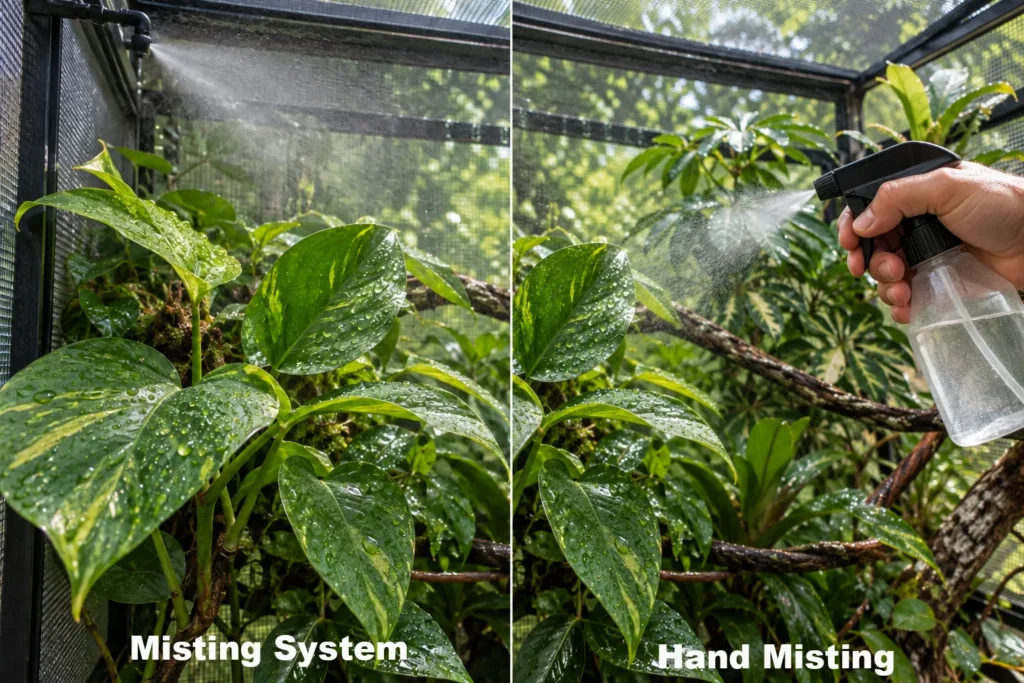
Monitor humidity throughout the day rather than relying on a single reading. Check that misting produces accessible water droplets on leaves, branches and enclosure walls, allowing your gecko to drink naturally.
If necessary, adjust the misting schedule to provide more frequent drinking opportunities while maintaining appropriate ventilation.
An automatic misting system can be particularly useful for keeping hydration routines consistent when you are away from home.
Providing a small, elevated water dish is another helpful measure. A magnetic wall-mounted feeding ledge with a shallow water container allows the gecko to access drinking water whenever needed.
When to Seek Veterinary Care
Severe dehydration requires prompt veterinary attention.
If your gecko is noticeably weak, has severely sunken eyes, struggles to climb or shows other significant symptoms, consult a veterinarian experienced in reptile medicine.
A qualified reptile veterinarian can assess the animal’s condition, administer appropriate fluid therapy when necessary and recommend further treatment to support recovery.
Do not attempt to administer injectable fluids yourself.
Important: Correcting enclosure conditions is essential, but environmental adjustments alone may not be sufficient to treat an animal that is already severely dehydrated.
Metabolic Bone Disease (MBD) in Leaf-Tailed Geckos
Metabolic Bone Disease (MBD) is a serious health condition that can affect captive Uroplatus when calcium metabolism is disrupted. It is commonly associated with inadequate calcium or vitamin D3, insufficient UVB exposure, or a combination of these factors.
Without proper treatment, MBD can weaken the skeletal system, affect normal movement and lead to permanent physical deformities.
Signs of Metabolic Bone Disease
Common warning signs include:
A wavy, bent or unusually shaped tail.
A soft or weakened jaw.
Curved, bowed or deformed limbs.
Reduced appetite or refusal to eat.
Poor coordination or difficulty moving normally.
Unusual weakness or lethargy.
These symptoms should be taken seriously, particularly when several appear together.
Common Causes
MBD is most frequently associated with problems involving calcium and vitamin D3 availability, including:
Insufficient calcium in the diet.
Inadequate vitamin D3.
Lack of appropriate UVB exposure.
UVB bulbs that are no longer producing sufficient ultraviolet radiation.
Vitamin D3 plays an essential role in calcium absorption, which is why appropriate lighting and dietary supplementation are both important aspects of leaf-tailed gecko husbandry.
Prevention & Treatment
If MBD is suspected, review the enclosure’s UVB lighting and supplementation routine immediately.
Check your UVB equipment: If your gecko already has a UVB fixture, verify that the lamp is functioning correctly, remains within its recommended service life and provides an appropriate UV Index at the animal’s accessible exposure area.
UVB output gradually decreases with use, even when the bulb continues to produce visible light. Follow the manufacturer’s replacement recommendations and, whenever possible, use a UV Index meter to check actual output.
If your enclosure does not currently provide UVB, consider installing an appropriate low-level UVB system suitable for Uroplatus, as outlined in the Lighting & UVB section of this guide.
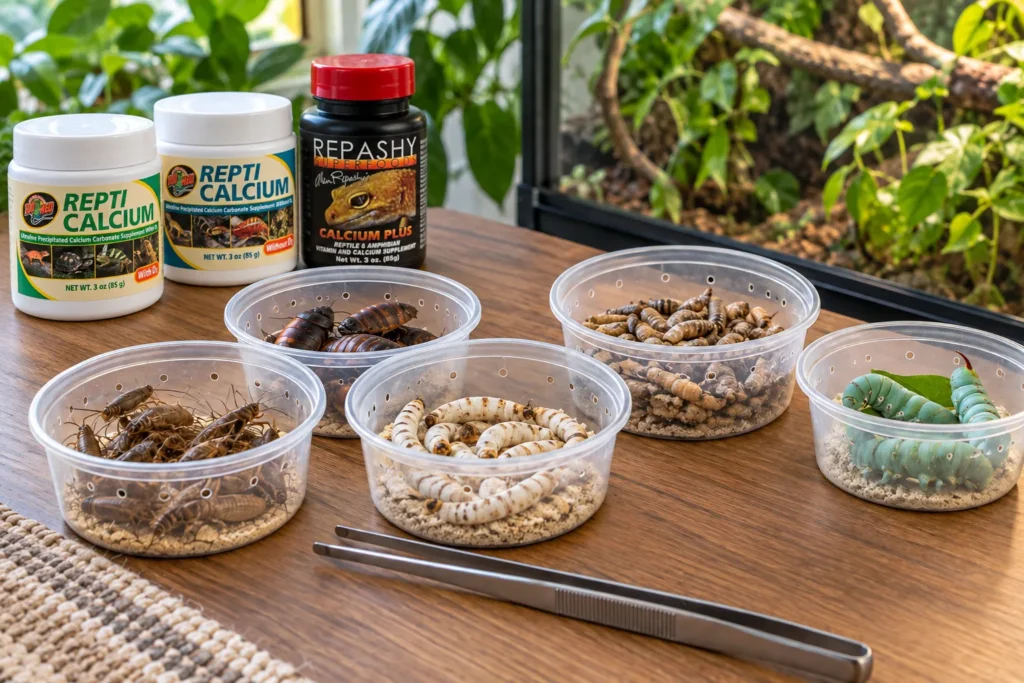
Review calcium supplementation: Animals diagnosed with MBD may require additional calcium and vitamin D3 to help restore normal calcium balance and support skeletal recovery. The appropriate supplement, dosage and treatment frequency should be determined by a reptile veterinarian rather than attempting intensive supplementation without professional guidance.
Veterinary Diagnosis
If you suspect your leaf-tailed gecko has MBD, arrange an examination with a veterinarian experienced in reptile medicine.
A veterinarian may recommend:
Blood testing to evaluate calcium levels and other relevant indicators.
X-rays to assess bone density and identify skeletal abnormalities.
Examination of the calcium sacs, sometimes called chalk sacs, located beneath the jaw.
A review of the gecko’s diet, supplementation routine and UVB lighting.
Early diagnosis and appropriate treatment can help prevent the condition from progressing and improve the animal’s chances of recovery.
Important: MBD cannot always be corrected through enclosure adjustments alone. Affected geckos may
Mites in Leaf-Tailed Geckos
Mites are small external parasites that may occasionally be observed on Uroplatus, particularly on recently imported (wild-caught) animals.
A Note About Mites on Imported Uroplatus
Some wild-caught Uroplatus may arrive carrying mites acquired in their natural habitat. These are often host-specific parasites that are not adapted to surviving or reproducing under captive conditions.
In our experience at Chameleons Canada, these mites generally disappear naturally after arrival without establishing a persistent infestation.
However, not all mite species behave the same way. Newly imported animals should still be carefully observed, and the presence of mites should never be automatically dismissed.
An important distinction: If your leaf-tailed gecko develops a mite infestation after settling into captivity, particularly when housed in a collection containing other reptile species, the parasites may have been introduced through another animal, enclosure or contaminated equipment.
In these circumstances, active treatment and proper enclosure sanitation may be necessary.
Signs of a Mite Infestation
Some geckos may show no obvious symptoms, while others may display:
Frequent itching or scratching.
Rubbing against branches or enclosure surfaces.
Reduced activity or unusual lethargy.
Tiny red or dark dots around the eyes, ears, vent, joints or beneath the dermal flaps.
Fine, ash-like particles on the skin, which may be mite waste.
Because Uroplatus possess elaborate skin folds and fringes, mites can be difficult to detect during a casual visual inspection.
Common Sources of Mites
Mites may be introduced through:
Newly acquired reptiles.
Contact with an infested animal or enclosure.
Contaminated equipment, furnishings or inadequate hygiene between enclosures.
Parasites already present on recently imported wild-caught animals.
Quarantine & Initial Inspection
Newly acquired geckos should be quarantined before being introduced to an established reptile collection.
A quarantine period of at least 4–6 weeks provides an opportunity to observe the animal’s behaviour, feeding response and general condition while monitoring for external parasites.
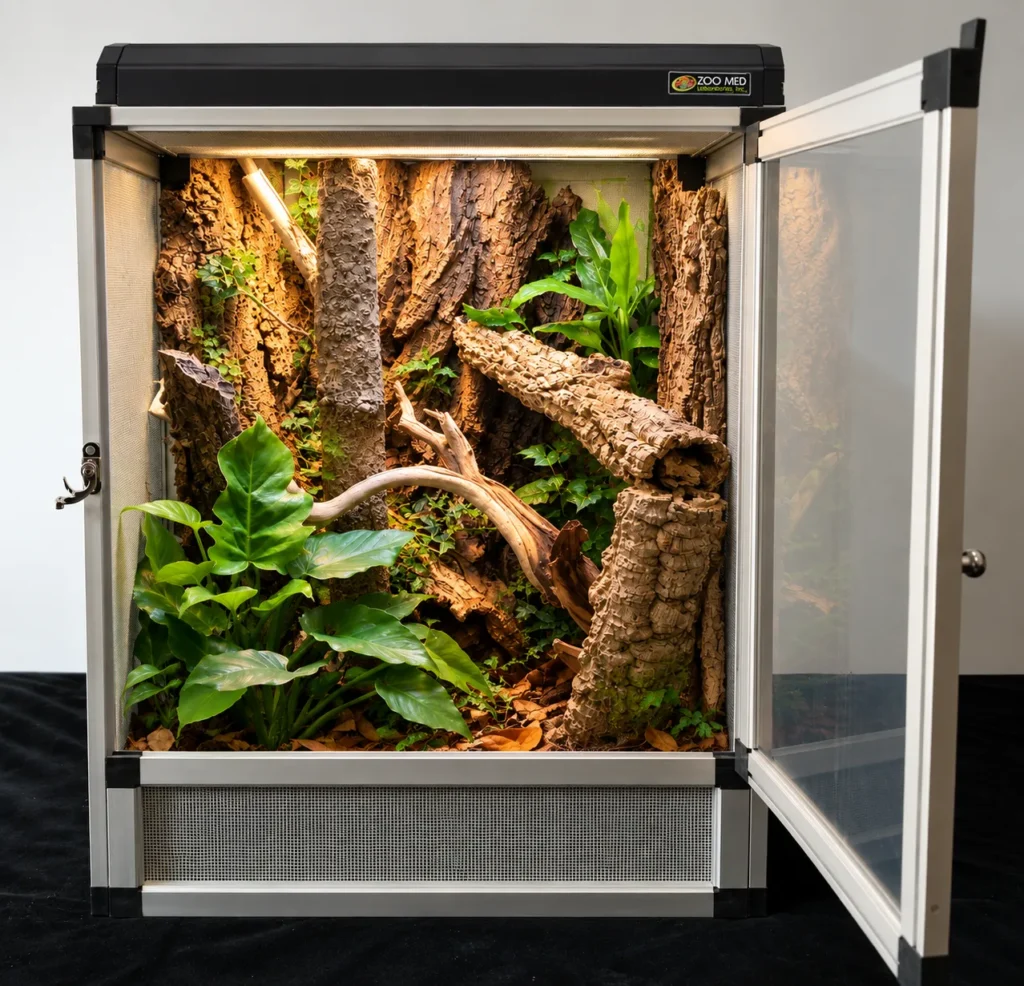
For easier inspection and cleaning, a temporary quarantine enclosure can contain:
Ideally, quarantine the gecko in a separate room from your other reptiles. Wash your hands and arms thoroughly after enclosure maintenance, and avoid sharing equipment between quarantine and established enclosures without proper disinfection.
Allow the animal approximately 2–3 weeks to settle before attempting a more detailed physical inspection, unless there is an immediate health concern.
When examining the gecko, carefully check around the eyes, ears, vent, joints and skin folds. Keep handling brief and avoid unnecessary repeated inspections.
For a stable animal, physical checks should generally be limited to once per week.
What to Do if Mites Are Found
If you discover mites, first determine whether you are dealing with a temporary parasite associated with a recent import or an active infestation that may have spread from another reptile in your collection.
Because leaf-tailed geckos are particularly sensitive to stress and chemicals, avoid applying conventional reptile mite sprays, insecticides or other parasite treatments directly to the animal without veterinary guidance.
A reptile veterinarian can identify the parasite and recommend a suitable treatment.
Cleaning an Infested Enclosure
If an active infestation is confirmed, thorough enclosure sanitation is essential to prevent mites and their eggs from remaining in the environment.
Follow these steps:
Temporarily relocate the gecko to a clean, secure enclosure with appropriate temperature, humidity and ventilation.
Remove and discard disposable substrate and furnishings that may harbour mites or eggs.
Thoroughly clean reusable furnishings using a method appropriate for the material.
Vacuum the empty enclosure carefully, paying particular attention to corners, joints, crevices and the upper frame where parasites may hide.
Wash the enclosure with warm, soapy water and rinse thoroughly.
Disinfect the enclosure using a reptile-safe product, following the manufacturer’s recommended dilution, contact time and rinsing instructions. Chlorhexidine-based disinfectants may be suitable for certain surfaces when used correctly.
Wipe down the exterior of lighting fixtures and other nearby equipment. Disconnect electrical equipment before cleaning, and never allow water or disinfectant to enter electrical components.
Vacuum and clean the surrounding area to reduce the possibility of reinfestation.
Reassemble the enclosure using fresh paper towels and clean, easily removable furnishings.
Return the gecko only when the enclosure is completely rinsed, dry where appropriate, free of chemical residue and restored to suitable environmental conditions.
Monitoring After Treatment
Continue observing the animal and enclosure for signs of recurring mites.
If parasites reappear, further cleaning and treatment may be required. Other reptiles in the collection should also be inspected, as an untreated source can allow the infestation to return.
Avoid excessive handling or repeated treatments if your gecko becomes stressed or stops feeding. Contact a reptile veterinarian to determine the safest way to proceed.
Persistent infestations, significant irritation, weakness or declining body condition should always receive professional veterinary attention.
Prevention Is the Best Approach
Good quarantine practices, regular enclosure maintenance and careful observation are the most effective ways to reduce the risk of mites spreading through a reptile collection.
Remember that Uroplatus are sensitive animals. Any parasite treatment should balance the need to eliminate an infestation with the importance of minimizing stress and avoiding potentially harmful chemicals.
Internal Parasites in Leaf-Tailed Geckos
Internal parasites can occur in both wild-caught (WC) and captive-bred (CB) Uroplatus. Their presence is not necessarily unusual and does not automatically indicate that an animal is unhealthy or requires treatment.
Many reptiles can carry low levels of certain intestinal parasites without displaying any apparent health problems. When maintained under appropriate environmental conditions, with proper nutrition, hydration and minimal stress, these animals may continue feeding, growing and behaving normally.
At Chameleons Canada, we believe parasite management should focus on the animal’s overall condition rather than automatically treating every gecko simply because parasites may be present.
However, parasite populations can sometimes become problematic, particularly when an animal experiences stress, unsuitable husbandry conditions or other health challenges.
The important distinction is recognizing when a normally tolerated parasite load may be contributing to an actual health concern.
Signs of a Possible Parasite Problem
Watch for the following warning signs:
Loose stools or persistent diarrhea.
Reduced appetite or refusal to eat.
Unusual lethargy or decreased activity.
Unexplained weight loss.
Deteriorating body condition despite apparently adequate feeding.
These symptoms are not exclusive to parasites and may also indicate other husbandry or medical issues.
When Is Treatment Necessary?
Finding parasites does not always mean immediate medication is required.
A gecko that is eating consistently, maintaining a healthy weight, producing normal stools and displaying typical behaviour may not require treatment solely because a parasite is detected.
However, if your animal begins showing persistent symptoms, veterinary assessment is recommended to determine whether intestinal parasites are contributing to the problem.
Treatment decisions should consider the parasite species, the animal’s condition, clinical symptoms and veterinary findings.
Acclimation & Stress Management
Leaf-tailed geckos can be particularly sensitive to handling, relocation and changes in their environment.
Recently acquired animals should be given adequate time to settle into their new enclosure before undergoing unnecessary handling or routine procedures.
Depending on the individual, acclimation may take approximately 1–2 months.
During this period, prioritize:
Appropriate temperature and humidity.
Consistent access to drinking water.
A suitable feeding routine.
Plenty of cover and climbing opportunities.
Minimal handling and disturbance.
Regular observation of appetite, weight and general behaviour.
If an animal develops significant symptoms during acclimation, however, do not delay veterinary attention simply to complete the settling-in period.
Diagnosis & Veterinary Treatment
If an intestinal parasite problem is suspected, collect a fresh fecal sample and arrange for examination by a veterinarian experienced with reptiles.
Ideally, submit the sample within 24 hours, following your veterinarian’s instructions for collection and storage.
A fecal examination can help identify the parasites present and determine whether further investigation or treatment is appropriate. Some infections may require additional testing or repeat samples.
If treatment is necessary, your veterinarian will prescribe medication suited to the parasite identified and the gecko’s individual condition.
Because Uroplatus are delicate and easily stressed, oral medication should be administered only according to veterinary instructions. Ask your veterinarian to demonstrate a safe administration technique rather than attempting to force the animal’s mouth open with improvised tools.
Preventing Reinfection
When treatment has been prescribed for a confirmed parasite problem, maintaining a clean enclosure is an important part of the recovery process.
After completing the prescribed treatment:
Remove and replace the enclosure substrate.
Thoroughly clean reusable furnishings and enclosure surfaces.
Disinfect suitable accessories using reptile-safe products.
Remove feces promptly to reduce environmental contamination.
Follow any recommendations for repeat fecal testing to confirm treatment effectiveness.
Good hygiene, appropriate quarantine procedures and avoiding unnecessary stress can help reduce the risk of parasite-related complications.
Observe the Animal, Not Just the Test Results
The presence of intestinal parasites and the presence of parasitic disease are not necessarily the same thing.
A healthy-looking gecko may
Shedding in Leaf-Tailed Geckos
Shedding is a completely natural process for Uroplatus. As leaf-tailed geckos grow and their bodies change, they periodically replace their outer layer of skin.
Under appropriate environmental conditions, healthy geckos generally complete this process without assistance. Shedding only becomes a concern when pieces of old skin remain attached, or the animal has difficulty removing them.
Signs Your Gecko Is Preparing to Shed
Before shedding, you may notice:
A dull, faded or slightly greyish appearance.
Reduced interest in food.
Lower activity levels than usual.
These temporary changes are generally normal and should resolve once shedding is complete.
What Happens During Shedding?
Leaf-tailed geckos typically remove and consume their old skin during the shedding process.
This natural behaviour allows them to recover some of the nutrients contained in the shed skin. As a result, you may never actually find discarded skin inside the enclosure.
Don’t be surprised if your gecko looks dull one evening and has returned to its usual appearance by the following morning!
Supporting a Healthy Shed
Adequate humidity is particularly important during shedding.
When your gecko begins showing signs of an upcoming shed, increase enclosure humidity to approximately 80–100% until the process is complete, while maintaining suitable ventilation.
Regular misting can help soften the old skin and make it easier for the gecko to remove naturally.
In most cases, no additional intervention is necessary.
What If Your Gecko Has Stuck Shed?
Occasionally, small pieces of old skin may remain attached to the body. This is commonly referred to as retained shed or stuck shed.
If you notice retained skin:
Check the enclosure’s humidity and mist as needed.
Maintain appropriately elevated humidity while ensuring good ventilation.
Allow approximately 24 hours for the gecko to remove the remaining skin naturally.
Inspect the animal again, paying particular attention to the toes, tail and other delicate areas.
If the retained skin persists, additional humidity may help.
Using a Temporary Humidity Chamber
A temporary humidity chamber can sometimes assist a gecko experiencing difficulty shedding.
To prepare one:
Select a clean plastic container appropriately sized for the animal.
Make small ventilation holes to allow airflow.
Place a damp paper towel inside, using lukewarm water.
Carefully place the gecko inside and secure the ventilated lid.
Allow approximately 20–30 minutes, while monitoring the animal and ensuring it does not become overheated or distressed.
The increased humidity may help soften the remaining