
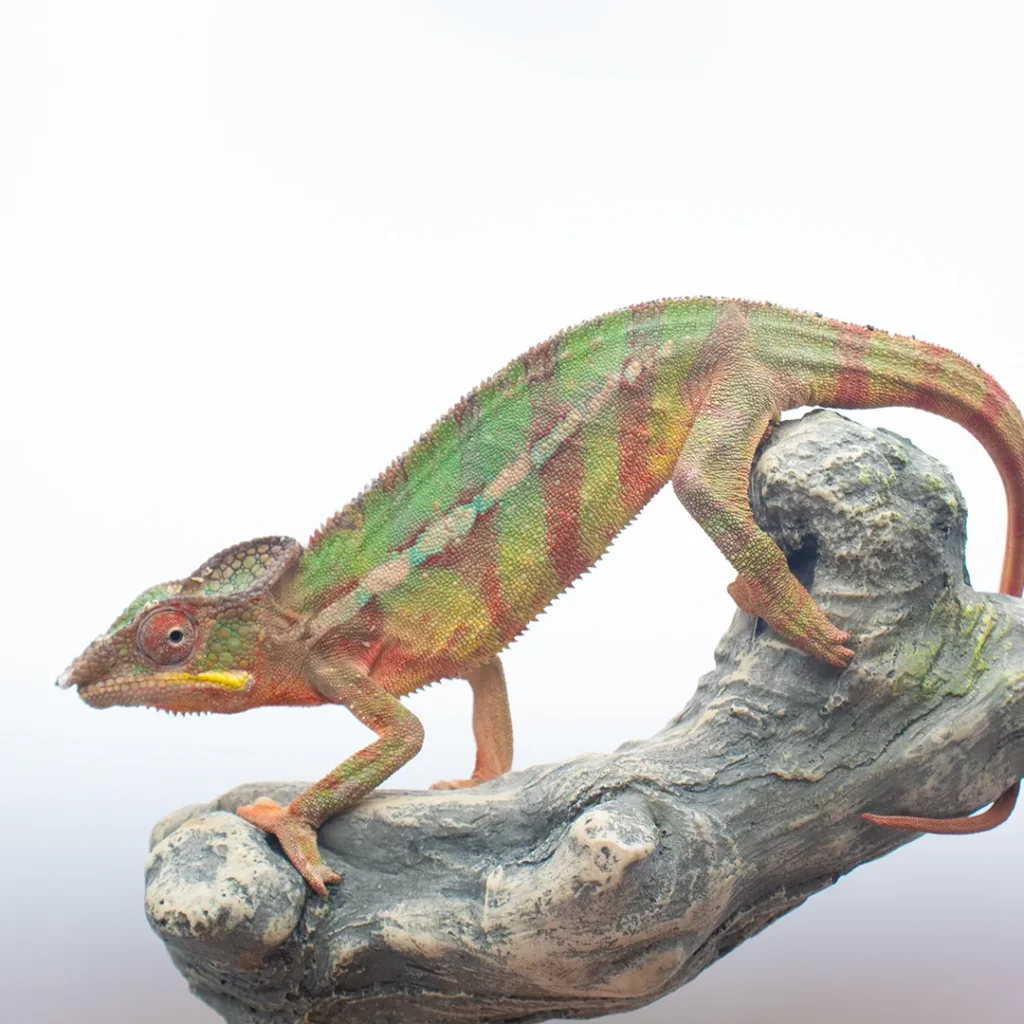
Panther Chameleons (Furcifer pardalis) are among the most colourful and fascinating reptiles in the world. Native to Madagascar, they are intelligent, highly visual animals with specialized environmental needs.
With the correct enclosure, lighting, hydration and nutrition, Panther Chameleons can thrive in captivity. This guide provides a practical starting point for creating a healthy and well-balanced environment.
Madagascar
Intermediate
24 × 24 × 48 in or larger
One chameleon per enclosure
22–25°C
Approximately 29°C
40–50% day · 80–100% night
Approximately UVI 3
Panther Chameleons are arboreal and require a vertically oriented enclosure with enough room to climb, explore, bask and retreat into cover.
A suitable minimum enclosure for one adult is:
24 × 24 × 48 inches, or
36 × 18 × 36 inches
Larger enclosures are encouraged whenever space permits. Panther Chameleons are territorial and should always be housed individually.
Screen, hybrid and properly ventilated glass enclosures can all work. The best choice depends on the temperature and humidity inside your home. In Canadian winters, a hybrid enclosure can make heat and humidity easier to maintain while still providing proper airflow.
Provide a secure network of horizontal and diagonal branches in several diameters. The enclosure should include:
A secure basking branch
Horizontal travel routes
Dense plant cover
Shaded resting areas
Open areas for hunting
Proper drainage for excess water
Live plants such as pothos, schefflera and hibiscus can provide natural cover and climbing opportunities. Confirm that all plants are reptile-safe and free from pesticides and leaf-polishing products.
Your chameleon should be able to move behind foliage and completely hide its body from view.

Panther Chameleons require a temperature gradient so they can move between warmer and cooler areas.
General daytime temperature: 22–25°C
Basking temperature: Approximately 29°C
Nighttime temperature: 15–21°C
A natural nighttime temperature drop is beneficial. Additional nighttime heat is usually unnecessary unless the room falls below the recommended range.
Measure temperatures with digital thermometers or a reliable infrared temperature gun. The basking lamp must remain outside the enclosure where the chameleon cannot touch it.
Panther Chameleons require appropriate UVB exposure to produce vitamin D3 and regulate calcium metabolism.
A linear T5 HO UVB fixture with a dedicated reflector is generally preferred. A useful starting target is approximately UVI 3 at the basking branch.
The correct bulb strength and distance depend on the fixture, reflector, enclosure screen and age of the bulb. A Solarmeter 6.5 provides the most reliable measurement.
Provide approximately 12 hours of light and 12 hours of darkness each day. Replace the UVB bulb according to the manufacturer’s recommendations, even if it still produces visible light.

Panther Chameleons benefit from a natural daily humidity cycle:
Daytime humidity: Approximately 40–50%
Nighttime humidity: Approximately 80–100%
Humidity may rise during misting, but leaves and enclosure surfaces should be allowed to dry during the day. Constantly wet, stagnant conditions can encourage bacterial and fungal growth.
Canadian homes can become extremely dry during winter, so always monitor the enclosure using a digital hygrometer rather than relying on a fixed schedule.
Panther Chameleons usually drink droplets from leaves and branches rather than standing water from a bowl.
Misting is most effective:
Before the lights turn on
After the lights turn off
During the night, when conditions are cooler
Automated misting sessions of approximately one to two minutes can be used as a starting point. Adjust the timing according to the enclosure, ventilation, season and your chameleon’s behaviour.
Make sure the enclosure has proper drainage and does not allow water to collect around plants or on the enclosure floor.

Panther Chameleons benefit from a varied diet of appropriately sized, properly gut-loaded insects.
Suitable feeders include:
Crickets
Dubia roaches
Silkworms
Black soldier fly larvae
Hornworms
Locusts, where available
Occasional superworms or other treat feeders
The feeder’s body should generally be no longer than the distance between the chameleon’s eyes.
Young, growing chameleons may be offered appropriately sized insects daily. Healthy adults are commonly offered approximately three to four feeders every other day. Adjust the amount according to age, activity, body condition and reproductive status.
Do not rely on only one feeder species. Remove uneaten insects, especially before nighttime.
A typical supplementation program may include:
Plain calcium without vitamin D3 for regular feedings
Calcium containing D3 according to UVB exposure and product directions
A reptile multivitamin used on a limited schedule
Dust feeders lightly—they should not appear heavily coated.
Supplement schedules vary according to the products used, diet, age and UVB exposure. Follow the manufacturer’s directions and the care plan recommended by an experienced breeder or reptile veterinarian.

Panther Chameleons are primarily display animals. Some individuals tolerate limited interaction, while others become stressed by handling.
Signs of discomfort may include:
Dark or high-contrast coloration
Flattening the body
Gaping or hissing
Retreating or hiding
Attempting to bite
Allow the chameleon to approach voluntarily whenever possible. Offer your hand or a branch as a pathway rather than grabbing the animal from above. Keep handling sessions brief.
Female Panther Chameleons can produce eggs even if they have never been with a male. Adult females should have access to a suitable laying area when they begin displaying reproductive behaviour.
Provide:
Approximately 4–6 inches of suitable soil-and-sand substrate
Substrate moist enough to hold a tunnel
Privacy around the laying area
Easy access from the enclosure
A female that becomes restless, explores the enclosure floor or begins digging may be preparing to lay eggs. Failure to lay can become a medical emergency. Contact an experienced reptile veterinarian if she appears weak, stops digging without laying or remains on the enclosure floor.
Chameleons often hide illness until a condition becomes serious. Contact an experienced reptile veterinarian if you notice:
Eyes closed during the day
Persistent sunken eyes
Weak grip or difficulty climbing
Swollen joints or bowed limbs
A soft or misshapen jaw
Significant loss of appetite or rapid weight loss
Swelling around the mouth, eyes or neck
Wheezing, mucus or open-mouth breathing
Persistent head tilting
Prolapsed tissue
Spending unusual amounts of time on the enclosure floor
Metabolic bone disease may be associated with inadequate calcium, insufficient UVB exposure or improper temperatures. Respiratory infections, parasites, dehydration and reproductive complications require professional diagnosis and treatment.
Do not attempt to diagnose a serious condition from photographs or social-media comments. Establish a relationship with a reptile veterinarian before an emergency occurs.
A care guide provides starting parameters—not an automatic formula for every animal.
Your room temperature, enclosure design, ventilation, lighting, plant density and local climate all affect the conditions your chameleon experiences. Measure the enclosure regularly and observe how the animal uses different areas throughout the day.
A healthy Panther Chameleon should generally have:
Open, alert eyes during the day
A strong grip
Controlled, coordinated movement
Regular feeding and drinking behaviour
Well-formed limbs and jaw
Access to both exposed and sheltered areas
Stable body condition
Careful observation, consistent husbandry and early veterinary attention are the foundations of successful long-term chameleon care.
Important: This guide is intended for general educational purposes and does not replace advice from a qualified reptile veterinarian. Requirements may vary according to the animal’s age, sex, health and individual circumstances.